Pictured Left: Herbert James Draper, 'A Water Baby' (1900)
Modern jewellery books often write about pearls symbolising the moon, divinity and femininity, but ancient sources are rarely so explicit. Yet the comparison is understandable. Pearls share the moon's soft radiance, its changing glow, and its longstanding associations with water, femininity and mystery. Over centuries, artists, writers, rulers and jewellers increasingly strengthened these connections, transforming the pearl into one of the most symbolically charged materials in the history of adornment.
What fascinates me is why pearls repeatedly became vessels for ideas about womanhood. At different moments in history they have symbolised fertility, luxury, chastity, mourning, sensuality, glamour, power and rebellion. More than almost any other gemstone, pearls have been continually reimagined to reflect changing cultural ideals of femininity.
In this article, I trace the myths, religious traditions, artworks and fashions that transformed pearls from rare marine curiosities into enduring symbols of both the feminine and the celestial.


Pictured Right: John William Waterhouse, 'A Mermaid' (1900)
East Asian traditions tell stories of the Jiaoren (鲛人— 'shark people' or 'flood dragon people') who are mythical aquatic beings similar to mermaids who shed tears that turn into precious pearls. A classic passage from ancient lore describes them: 'In the midst of the South Sea are the houses of the kău [...] people who dwell in the water like fish, but have not given up weaving at the loom. Their eyes have the power to weep, but what they bring forth is pearls.'
Chinese folklore frequently linked pearls with dragons, rain and the powers of the sky. Dragons, regarded as bringers of rain and masters of storms, were often depicted pursuing or guarding luminous pearls. Western art historians generally interpret the 'flaming' pearl as the representation of the sun or moon. In Chinese literature, the pearl does not seem to be referred to as a heavenly body, but an object of great value that enhances the benign dragon who treasures it.
Although these traditions differed, they reveal a recurring tendency to imagine pearls not as products of the earth, but as objects born through an encounter between the celestial and aquatic worlds.


Pictured Left: Titian, 'Venus Anadyomene' (1520)
By the Roman period, pearls had become one of the most coveted luxury goods in the Mediterranean world.
In 46 BC, Julius Caesar dedicated a pearl-covered breastplate in the Temple of Venus Genetrix, suggesting that pearls could serve as offerings to the goddess as well as markers of earthly wealth.
Taken together, the surviving evidence suggests that pearls were associated with Venus not because Romans believed they came from her body, but because both the goddess and pearls belonged to the symbolic realm of the sea.


Pictured Above: Jan van Eyck, The Virgin and Child with Canon van der Paele (1434 - 1436)
As Christianity spread throughout Europe, pearls increasingly became associated with spiritual purity rather than fertility or divine beauty.
In early Christianity, pearls became linked with sacred value and heavenly reward. In the New Testament, pearls appear in the “pearl of great price”, the warning not to “cast pearls before swine”, and the pearly gates of the New Jerusalem. These references helped turn the pearl into a symbol of spiritual value, sacredness and virtue.
As pearls naturally formed within the pure white shell of an oyster, church scholars and medieval writers frequently compared them to the immaculate conception and virginity of Mary. Pearls were heavily featured in sacred art, illuminated manuscripts, and devotional objects to frame or adorn the Virgin Mary and Christ child, representing spiritual perfection and the Kingdom of Heaven. Worn by royalty, high-ranking clergy, and wealthy nobility, jeweled girdles, coronets, and portable shrines (such as the 15th-century portable shrine of Thomas Basin containing dozens of pearls and gems) blended earthly wealth with intense religious piety.
PICTURED RIGHT: STEPHAN LOCHNER, 'MADONNA OF THE ROSE BOWER' (C. 1440)


The Renaissance inherited pearls from both the classical world and Christianity. They remained symbols of wealth, status and virtue, but jewellers increasingly began to use baroque pearls as miniature sculptures. Their irregular forms were transformed into mermaids, sea creatures, gods and monsters drawn from classical mythology. In these jewels, pearls became more than precious objects; they became the raw material from which fantastical stories could be constructed.
Pictured Left - Right: Nereid and Child, 16th century - Held by the British Museum; Pendant Shaped as a Dove, 17th century - Held by the Art Institute of Chicago; Pendant Shaped as a Dragon, c. 1575-c. 1600 - Held by the Art Institute of Chicago; Pendant in the Form of Neptune and a Sea Monster, early 17th century - Held by the Metropolitan Museum of Art; Baroque Pearl Mounted as a Cat Holding a Mouse, 17th century - Held by the Art Institute of Chicago


The fascination with pearls as vehicles for mythological storytelling also reappeared during the nineteenth-century Renaissance Revival. Victorian jewellers looked back to both the Renaissance and the classical world for inspiration, creating jewels depicting mermaids, sea creatures, Neptune and other mythological figures. These designs reflected a period in which folklore and scientific inquiry frequently overlapped. Mermaids, for example, were not universally dismissed as fantasy. Reports of strange sea creatures, hoaxes such as the famous Feejee Mermaid, and debates about the limits of natural history led some Victorians to wonder whether mermaids might be real.
As a result, celestial and mermaid jewellery occupied a fascinating space between natural history, folklore and fantasy. Whether arranged into crescent moons, transformed into mermaids, or incorporated into scenes from classical mythology, pearls repeatedly served as a bridge between the natural and the imagined world.
Unlike diamonds, which were prized largely for their perfection, pearls seemed to invite narrative. Their organic origins, association with the sea and unusual shapes encouraged generations of artists and jewellers to project stories onto them.
Pictured Left-Right, Top-Bottom: Reinhold Vasters (assumed), Pendant in the form of a mermaid, (ca. 1870–95) - Held by the Metropolitan Museum of Art; The Canning Jewel (1850 - 1860) - Held by the Victoria and Albert Museum; Unknown, Pendant in the form of a double-tailed mermaid, (1850-1900) - Held by the Victoria and Albert Museum; Erasmus Hornick, Mermaid, 1800-1857 - Held by the British Museum; Louis Wièse, Necklace, (ca. 1890) - Held by the Victoria and Albert Museum


Pictured Right: Maud Allan in Visions of Salome, 1908
At the beginning of the century, pearls appeared in the costumes of performers such as Maud Allan, whose controversial interpretation of Salomé paired pearl jewellery with exoticism, spectacle and female sexuality. In the Roaring Twenties, long ropes of pearls became synonymous with flapper fashion, embodying modern luxury, independence and a carefree rejection of older social conventions.

Pictured Left: Coco Chanel, Getty Images
Coco Chanel further transformed the pearl's image by mixing fine jewellery with costume jewellery. Her layered strands of real and imitation pearls challenged traditional ideas of value and helped establish pearls as an essential element of modern elegance rather than simply a sign of inherited wealth.

Pictured Right: Audrey Hepburn, Breakfast at Tiffany's
By the mid-twentieth century, pearls had become closely associated with a particular vision of feminine sophistication. Figures such as Jacqueline Kennedy and Audrey Hepburn, particularly in Breakfast at Tiffany's, presented pearls as emblems of refinement, grace and effortless glamour.

Pictured Left: Vivienne Westwood in her Mayfair Bas Relief Pearl Choker
Yet pearls proved remarkably adaptable. Later designers reinterpreted them for entirely different audiences. Vivienne Westwood drew upon historical forms such as multi-strand pearl chokers, but reimagined them through the lens of punk and rebellion. The familiar Victorian-inspired silhouette remained, yet the message had changed. Pearls were no longer symbols of conformity, but tools for challenging it.

Pictured Left-Right, Top Row: Claudia Schiffer at the Chanel Fall/Winter 1990-1991 show - Daniel SIMON/Gamma-Rapho via Getty Images 2) Christy Turlington at Chanel Haute Couture Spring/Summer 1993 show - Victor VIRGILE/Gamma-Rapho via Getty Images; 3) Helena Christensen at the Chanel Fall/Winter 1991-1992 show - Pierre Vauthey/Sygma/Corbis via Getty Images; Linda Evangelista at the Chanel Spring/Summer 1991 show - Julio Donoso/Sygma via Getty Images. Bottom Row: 1) Linda Evangelista at the Chanel Ready to Wear Spring/Summer 1991-1992 fashion show, via Getty Images; Linda Evangelista at the Chanel Fall/Winter 1991-1992 show - Daniel SIMON/Gamma-Rapho via Getty Images; 3) Naomi Campbell at the Chanel Spring/Summer 1992-1993 show - Victor VIRGILE/Gamma-Rapho via Getty Images; Claudia Schiffer at the Spring/Summer Haute Couture show during Paris Fashion Week - Getty Images.
By the end of the century, Karl Lagerfeld's work for Chanel pushed pearl jewellery into the realm of fashion theatre. Oversized ropes of pearls, worn in exaggerated quantities, transformed the classic pearl necklace into something playful, self-aware and deliberately excessive.Unlike many gemstones, pearls have never remained tied to a single meaning.
Across the twentieth century, pearls became a remarkably flexible symbol, continually adapted to express changing ideas of femininity, power, glamour, rebellion and identity. If earlier generations imagined pearls as gifts of the moon, the sea or the gods, modern fashion transformed them into something equally fascinating: a material onto which each era could project its own vision of womanhood.

-

 Sold out
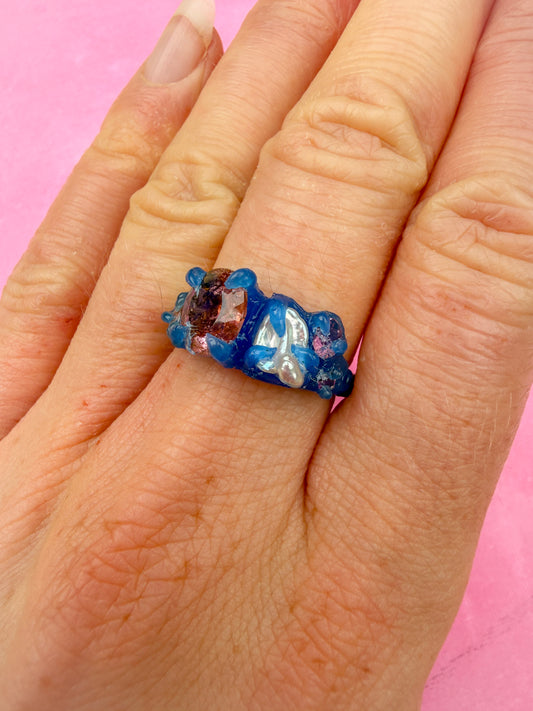
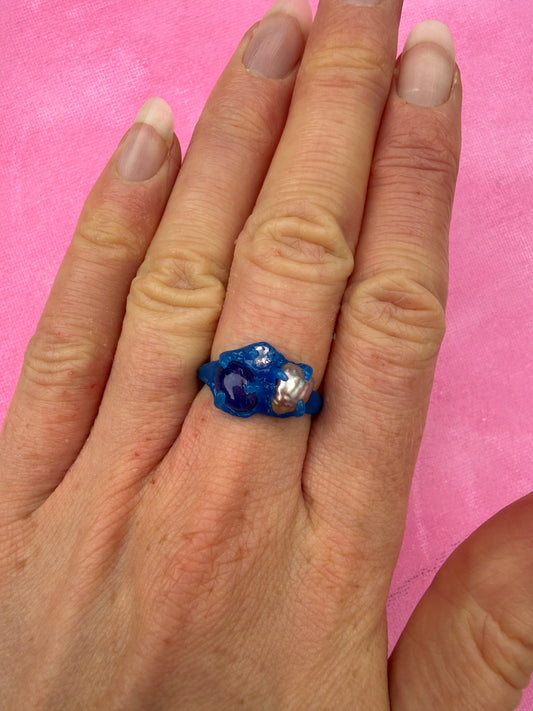
Purple Keshi Pearl and Amethyst Ring
Regular price £157.50 GBPRegular priceUnit price per£210.00 GBPSale price £157.50 GBPSold out -
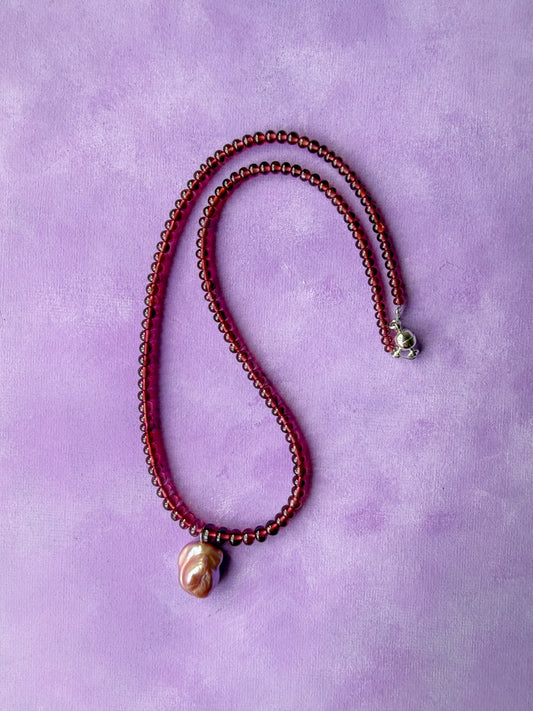
The Fairy Queen's Love Letter | Rhodolite Garnet & Lavender Keshi Pearl Necklace
Regular price £63.75 GBPRegular priceUnit price per£85.00 GBPSale price £63.75 GBPSold out -
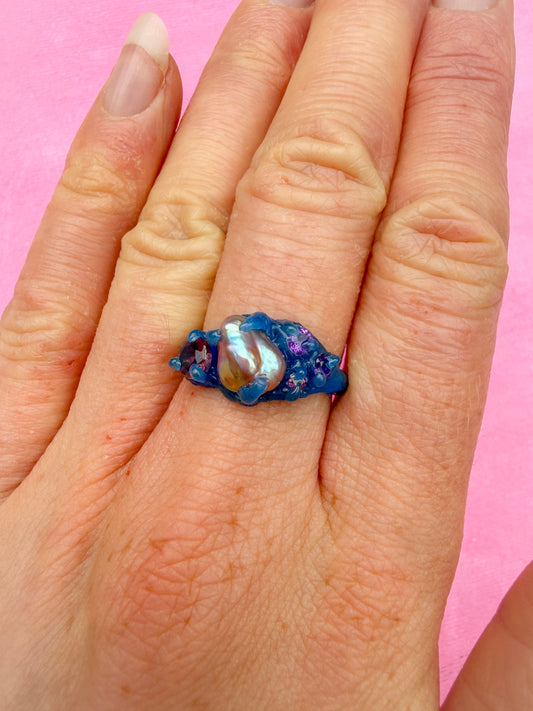
Peachy Pink Tourmaline and Keshi Pearl Ring
Regular price £240.00 GBPRegular priceUnit price per£320.00 GBPSale price £240.00 GBPSale -
Purple Keshi Pearl, Pink Tourmaline and Amethyst Ring
Regular price £277.50 GBPRegular priceUnit price per£370.00 GBPSale price £277.50 GBPSale -
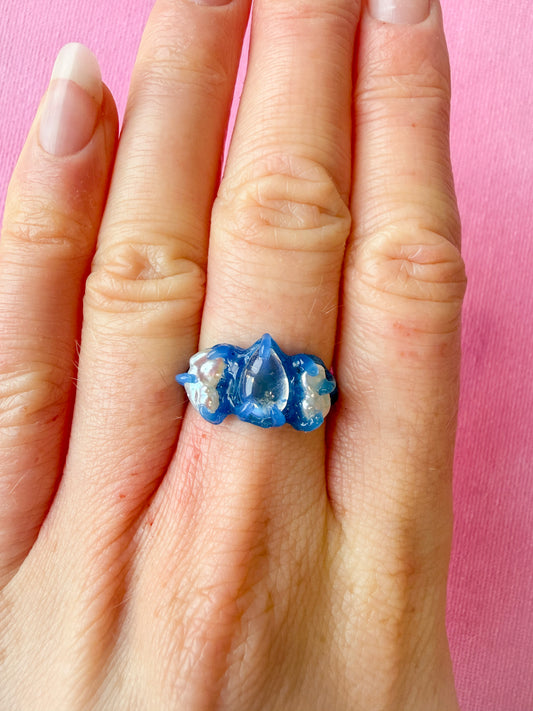
Fine Pear Moonstone and Keshi Pearl Ring
Regular price £270.00 GBPRegular priceUnit price per£360.00 GBPSale price £270.00 GBPSale -
Pink Pearl Pin-Up Mermaid Dangly Earrings
Regular price £352.50 GBPRegular priceUnit price per£470.00 GBPSale price £352.50 GBPSale -
Moonflower Nymph | Aquamarine and Keshi Pearl Necklace
Regular price £63.75 GBPRegular priceUnit price per£85.00 GBPSale price £63.75 GBPSale -
The Fairy Queen's Garland | Spinel & Lavender Keshi Pearl Choker Necklace
Regular price £108.75 GBPRegular priceUnit price per£145.00 GBPSale price £108.75 GBPSale -
Moonpool Dew | Aquamarine & Lavender Keshi Pearl Necklace
Regular price £71.25 GBPRegular priceUnit price per£95.00 GBPSale price £71.25 GBPSale -
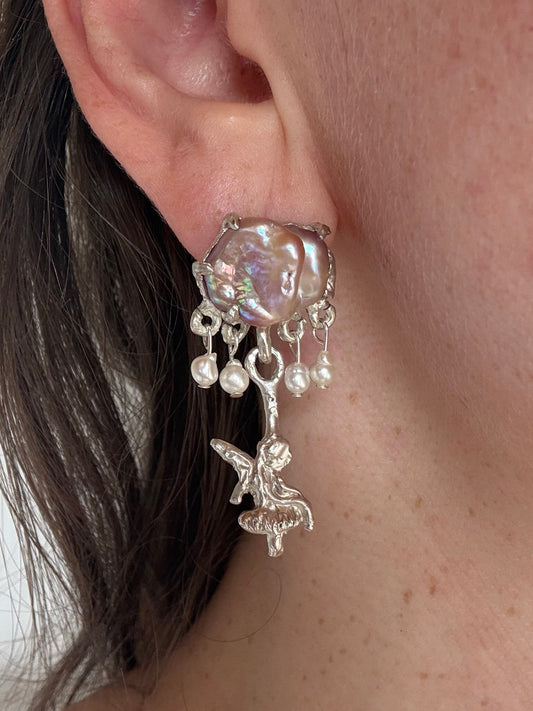
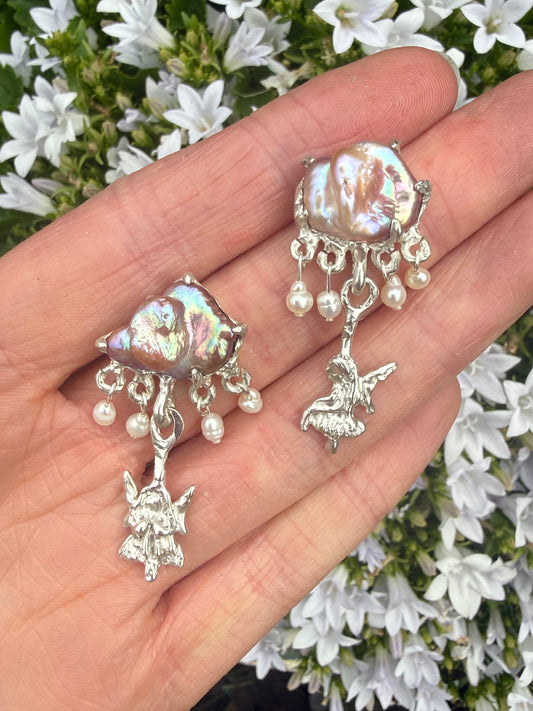
Fairy Raincloud Earrings - One of a Kind
Regular price £440.00 GBPRegular priceUnit price per£550.00 GBPSale price £440.00 GBPSale -
Moonchild Pearl Drop Earrings
Regular price £180.00 GBPRegular priceUnit price per -
Loveheart Pearl Drop Earrings
Regular price £180.00 GBPRegular priceUnit price per -
Coquette Pearl Drop Earrings
Regular price £180.00 GBPRegular priceUnit price per