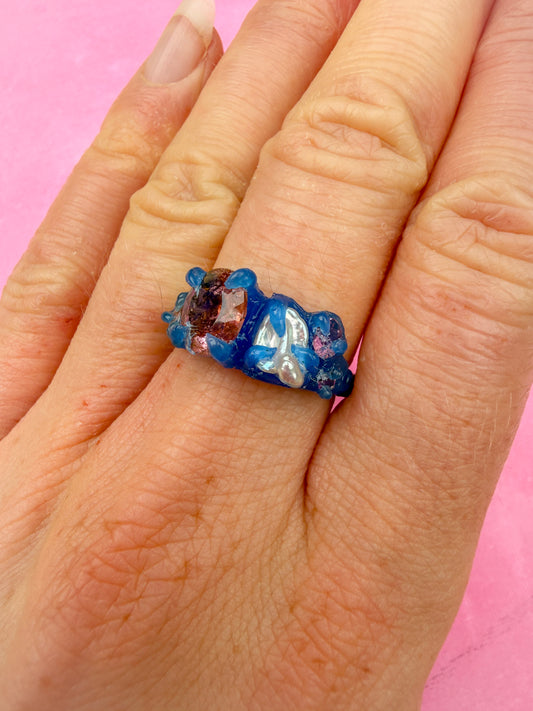
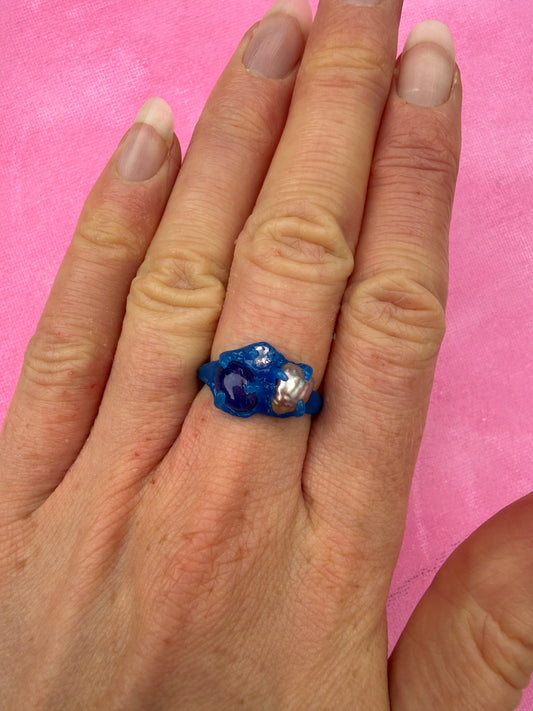
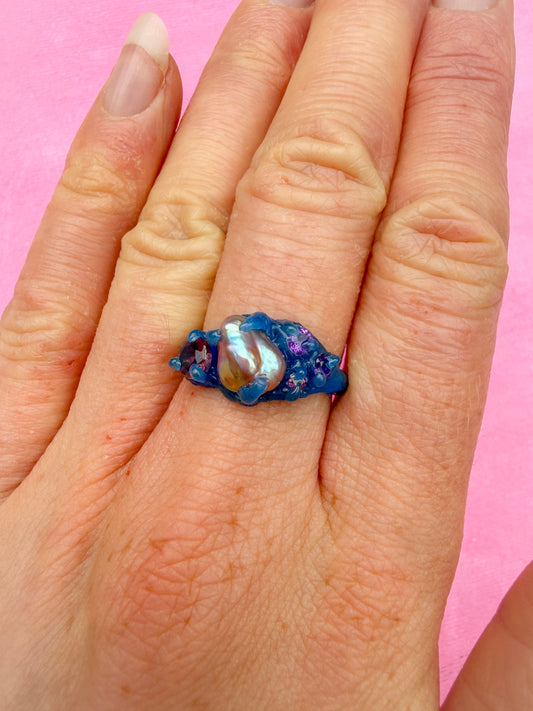
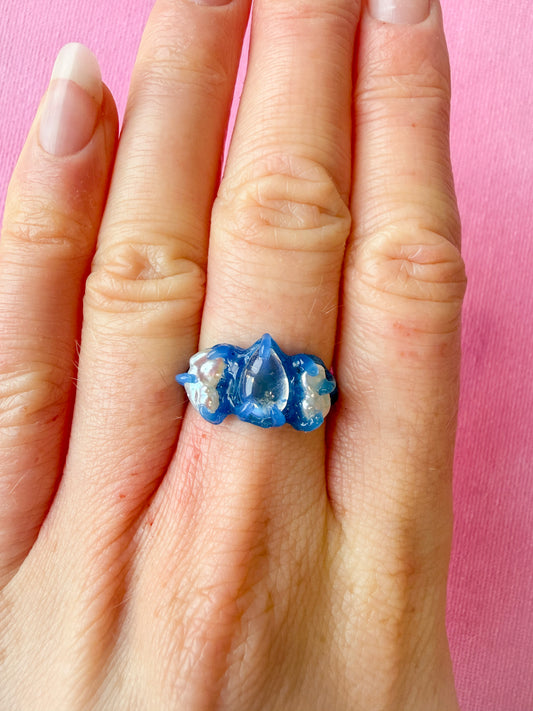
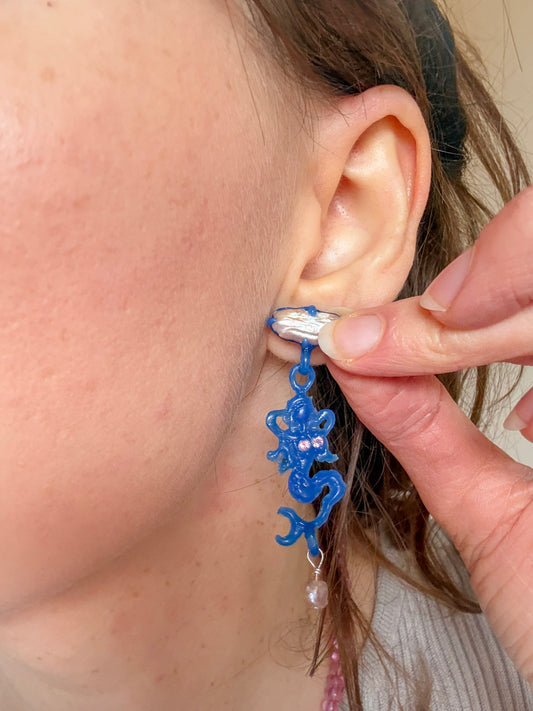
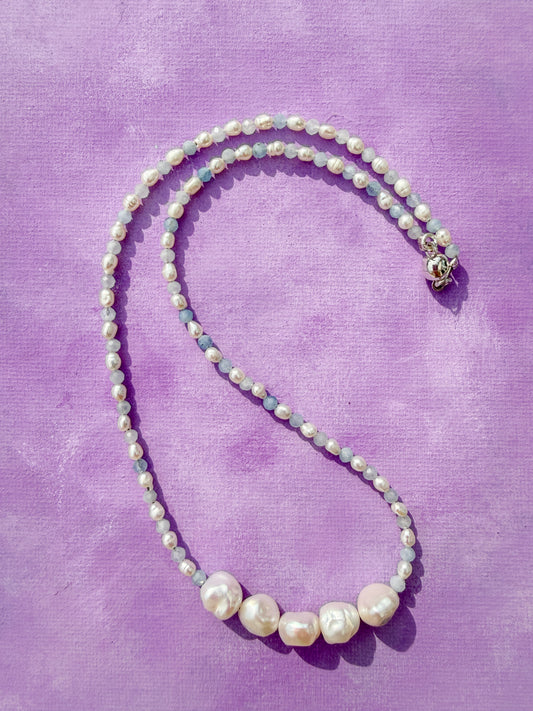
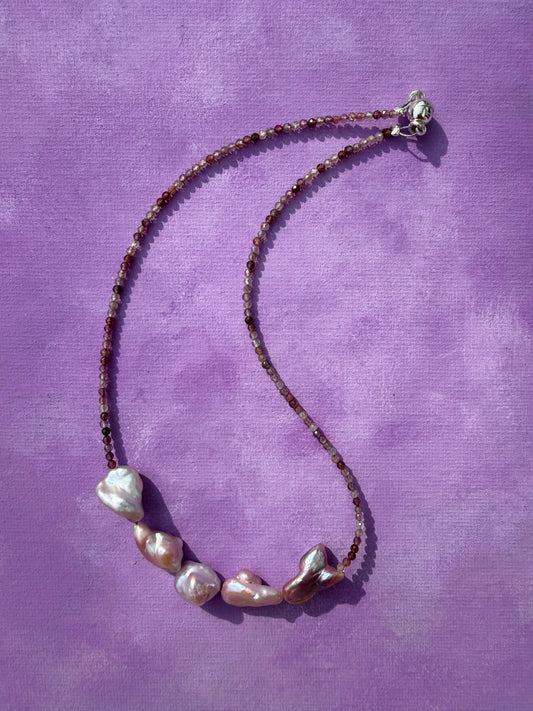
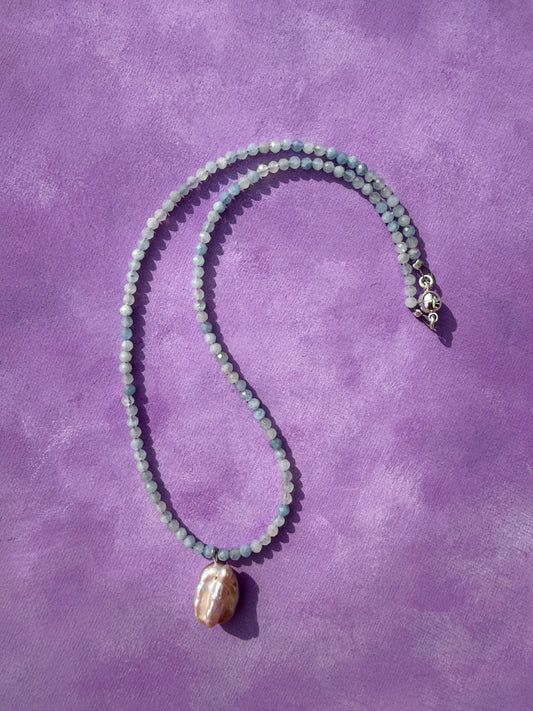
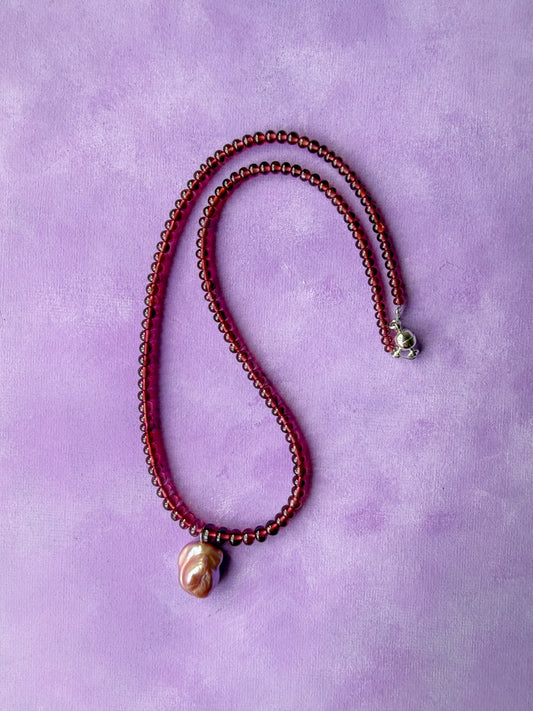
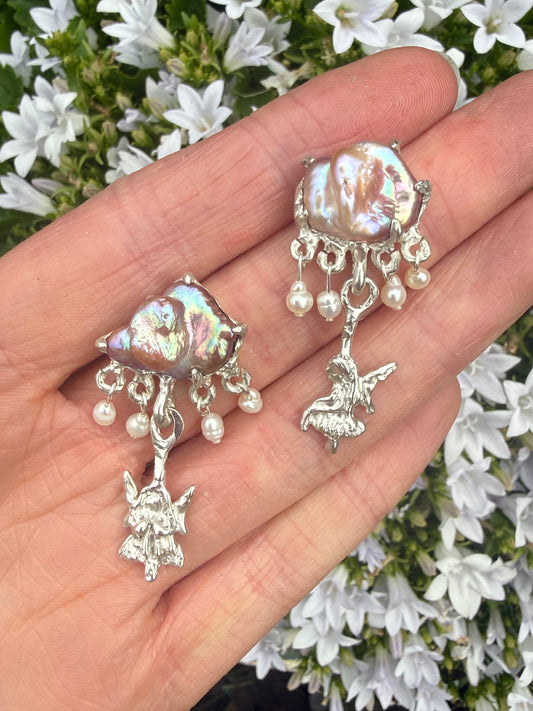
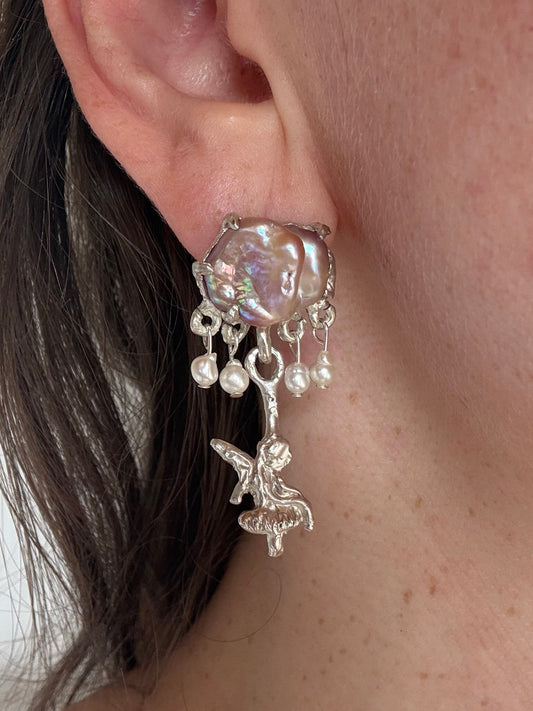
Pictured Left: Lavender and Ivory Keishi Pearls
In this guide:
- Introduction
- What are pearls?
- What is nacre?
- What is a pearl's orient?
- What types of pearls are there?
- Are cultured pearls real?
- Freshwater vs seawater pearls
- What colour are pearls?
- Why are pearls different colours?
- What shapes do pearls come in?
- Why are some pearls more expensive than others?
- How can you tell if a pearl is real?
- What do pearls symbolise?
- What is the best way to wear pearls?
- Can you wear pearls every day?
- Are pearls suitable for rings?
- Caring for pearl jewellery
- Pearl Jewellery FAQ


What Are Pearls?
Pearls are created by living molluscs rather than being mined from the earth. They form when any irritants worm their way into the shells of molluscs, such as tiny insects, and the mollusc, in an effort to kill the parasite, covers the foreign body with layers of nacre.

What Is Nacre?
Nacre, also known as Mother of Pearl, is the iridescent substance that coats the inside of mussels and oysters and the outer surface of pearls. The number of and thickness of the layers of aragonite and conchiolin (the substances that make up nacre) determine the specific lustre, iridescent and colour of the nacre and pearl.
Pearls can appear to glow and have a unique warmth and depth unlike any other gemstone.
This is because nacre is actually a translucent substance which allows light to reflect off the exterior surface, as well as from layers underneath the surface.

What Is A Pearl's Orient?
A pearl's orient is the soft, shimmering rainbow effect that moves across the surface of a pearl when the light shifts. This is different to a pearl's body colour or overtone because it comes from the way light passes through the nacre of the pearl.


What Types of Pearls Are There?
Most pearl jewellery today uses freshwater pearls. Other famous pearl varieties include Akoya pearls, known for their round shape and high lustre; Tahitian pearls, famous for their darker colours; and South Sea pearls, which are among the largest and most valuable pearls available.

Are Cultured Pearls Real?
Cultured pearls, also called farmed pearls, are pearls grown on a pearl farm with the intervention of man. Most pearls available for sale today are cultured/farmed pearls.
Natural pearls are pearls grown without the intervention of man.
Cultured/farmed and natural pearls are all made from the same material and therefore 'real' pearls. The only difference is how they were grown.

Freshwater vs Seawater Pearls
Pearls can be grown in mussels and oysters in freshwater and seawater.
Up until recently, the only good quality pearls were saltwater pearls. But over the past twenty years, Chinese pearl farmers have started producing large, metallic, smooth shiny pearls that challenge even the most valuable South Sea Pearls.

What Colour Are Pearls?
Despite round white pearls being the most famous, pearls are not usually round, and they're not always white. Natural pearls range in colours from almost white to almost black, and come in shades of pink, purple, peach, green and gold. Many pearls on the market are dyed or treated to enhance their colour.

Why Are Pearls Different Colours?
The exact reasons pearls develop different colours are not completely understood, although genetics are believed to play the largest role, alongside environmental factors.

What Shapes Do Pearls Come In?
Pearls are rarely round, which is why the round ones tend to cost so much. Pearls can also be semi-round, elliptical (also called rice), buttons, drops and drips, fireballs, baroque, nuggets, keishi (also spelt keshi), sticks, biwa, ripples, potatoes, coins, tokki, or souffle.


Why Are Some Pearls More Expensive Than Others?
Pearls are graded between A and AAA, where A is not good and AAA is the best.
Four categories are considered when grading a pearl: roundness, lustre, colour and size. The best pearls are round, if they're supposed to be, and they will have mirror metallic lustre, which means they will be as reflective as well-polished silver and gold. Usually, the bigger the pearl, the more valuable it is.

How Can You Tell If A Pearl Is Real?
There are two ways a pearl may be fake.
- It may not be a pearl at all.
- It could be a lower quality pearl attempting to pass off as a more valuable kind of pearl.
There are many subtle tells for if a pearl is real or fake, which I as a jeweller have to look out for. I source all of my pearls from pearl specialist and gemstone suppliers in the UK as I'm wary about buying imitation or low quality pearls online.
As a customer, these are some tells you can look out for:
- Real pearls will feel cold when you first touch them. In the past, fashionable ladies had their lady's maid where their pearls before they put them on so they didn't get a cold jolt.
- Imitation pearls will feel smooth when rubbed against each other, whilst genuine pearls feel ever so slightly rough.
- High quality pearls have a beautiful metallic lustre, whereas lower quality ones won't be as shiny.


What Do Pearls Symbolise?
Pearls have never held just one meaning. Across ancient cultures, pearls were seen as objects of wonder because they seemed to emerge fully formed from a living creature, rather than being mined from the earth. Because of their round, glowing, sea-born quality, pearls were repeatedly linked with the moon, water, femininity and divine origins. At different moments in history they have symbolised fertility, luxury, chastity, mourning, sensuality, glamour, power and rebellion. More than almost any other gemstone, pearls have been continually reimagined to reflect changing cultural ideals of femininity.
You can read more about the history of the symbolism of pearls in my article, 'Women in Pearls: The Changing Symbolism of Pearls Throughout History'.

What Is The Best Way To Wear Pearls?
One of the reasons pearls have remained popular for centuries is their versatility. They can be styled in countless ways, from classic pearl strands associated with Coco Chanel, Audrey Hepburn and Jacqueline Kennedy, to gothic-inspired pearl chokers, romantic fairycore layering, Renaissance-inspired statement jewellery and contemporary fashion pieces.
Throughout history, pearls have been worn by queens, film stars, punks and romantics alike. Rather than belonging to a single trend, pearls continually reinvent themselves alongside changing fashion and cultural tastes.


Can You Wear Pearls Every Day?
Absolutely - wearing pearls actually helps to keep them shiny, as the natural oils on human skin.

Are Pearls Suitable For Rings?
Ring designs featuring pearls are very beautiful, but because pearls are soft and only score 2.5 on the Mohs scale of gemstone hardness, they are easily scratched. To protect pearls in rings, I use protective stone settings such as bezel and chunky claw settings that enclose the edge of pearls.
Caring For Pearl Jewellery

How To Protect A Pearl's Lustre
In order to protect a pearl's lustre (also known as their shine), my advice is simple:
- Apply all perfumes, makeup and hair products before putting on your pearls.
- Store your pearls separately from any jewellery with hard gemstones that might scratch the delicate nacre surface.
- Remove your pearl jewellery before exercise - excessive sweating and body oils can dull the surface.
- Keep them breathing by storing them in a soft jewellery box, soft cloth or breathable pouch, rather than an airtight bag.
- Avoid harsh cleaners - a gentle wipe with a microfibre cloth will suffice.
- Wear them! Pearls benefit from a little moisture, such as your natural body oils.

How Do You Care For Your Pearl Jewellery?
Pearls are soft so they do need some care to prevent scratches. Mostly, this involves not storing them beside other metal and gemstone jewellery that could scratch them and removing them before exercise. Other than that, an occasional wipe down with a soft cloth will suffice. Never use dip or liquid kits, as pearls are porous.
Pearls can get wet, but if they are strung on a silk string, be careful not to leave the string damp, as it will rot.
Many of my pearl jewellery designs are set in silver or gold. For these pieces, you can clean the metal with a soft toothbrush, warm water and washing up liquid, and polish the metal with a silver or gold impregnanted cleaning cloth.
Pearl Jewellery FAQ
-
Peachy Pink Tourmaline and Keshi Pearl Ring
Regular price £320.00 GBPRegular priceUnit price per -
Purple Keshi Pearl and Amethyst Ring
Regular price £210.00 GBPRegular priceUnit price per -
Purple Keshi Pearl, Pink Tourmaline and Amethyst Ring
Regular price £370.00 GBPRegular priceUnit price per -
Fine Pear Moonstone and Keshi Pearl Ring
Regular price £360.00 GBPRegular priceUnit price per -
Pink Pearl Pin-Up Mermaid Dangly Earrings
Regular price £470.00 GBPRegular priceUnit price per -
Moonflower Nymph | Aquamarine and Keshi Pearl Necklace
Regular price £85.00 GBPRegular priceUnit price per -
The Fairy Queen's Garland | Spinel & Lavender Keshi Pearl Choker Necklace
Regular price £145.00 GBPRegular priceUnit price per -
Moonpool Dew | Aquamarine & Lavender Keshi Pearl Necklace
Regular price £95.00 GBPRegular priceUnit price per -
The Fairy Queen's Love Letter | Rhodolite Garnet & Lavender Keshi Pearl Necklace
Regular price £85.00 GBPRegular priceUnit price per -
Fairy Raincloud Earrings - One of a Kind
Regular price £550.00 GBPRegular priceUnit price per -
Moonchild Pearl Drop Earrings
Regular price £180.00 GBPRegular priceUnit price per -
Loveheart Pearl Drop Earrings
Regular price £180.00 GBPRegular priceUnit price per -
Coquette Pearl Drop Earrings
Regular price £180.00 GBPRegular priceUnit price per