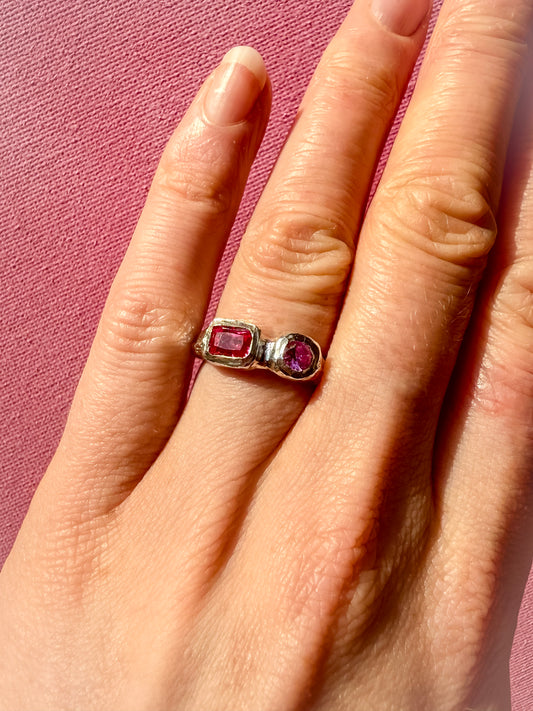
★ ★ ★ The Ultimate Lab-Grown Ruby Guide ★ ★ ★
Lab-Grown Rubies Explained: What They Are, and Why Natural Rubies Are So Rare
Lab-grown rubies are chemically and visually identical to natural rubies, but created in controlled laboratory conditions rather than formed over millions of years in the earth. For many buyers searching for “lab-grown rubies” or “are lab rubies real,” the key question is often how they compare to natural stones—and whether natural rubies, especially larger ones, are actually worth the premium.
What is a lab-grown ruby?
A lab-grown ruby is a real ruby in terms of its chemical composition (corundum, the same mineral family as sapphires). The difference is origin, not identity. These stones are grown using high-heat processes that replicate natural conditions, producing rubies that are:
- Visually identical to natural rubies
- Typically much more affordable
- Often more available in larger, cleaner sizes
For most people, lab-grown rubies offer the look of a fine ruby without the rarity-based pricing of natural stones.
Why natural rubies are so rare
Natural rubies are one of the most sought-after gemstones in the world, and high-quality stones—especially larger ones—are extremely scarce.
The main reasons are:
- Formation conditions are rare: Rubies require very specific geological environments to form correctly.
- Inclusions are common: Most natural rubies contain internal fractures or mineral inclusions.
- Large stones are exceptionally uncommon: As carat size increases, quality drops dramatically in availability.
This is why a fine, untreated natural ruby over 1–2 carats can already be considered rare. Above that size, availability becomes significantly limited, and prices rise exponentially.
The issue of glass-filled rubies
When searching for rubies, you may also come across “glass-filled rubies.” These are natural rubies that have been treated by filling fractures with lead glass to improve appearance.
While this makes them more visually appealing and affordable, it significantly affects durability and long-term value:
- The glass filling can be damaged by heat or chemicals
- Stones may require extra care and maintenance
- They are not considered equivalent to untreated natural rubies in value
For this reason, glass-filled rubies sit at a very different level in the market compared to both untreated natural rubies and lab-grown stones.
All that being said, glass-filled rubies still make very beautiful jewellery if you're choosing rubies for their colour, rather than long-term value.
Lab-Grown Rubies vs Natural Rubies: What’s The Difference?
When comparing lab-grown rubies to natural rubies, the differences are not about appearance at first glance—but about origin, rarity, and value perception.
- Lab-grown rubies: consistent, affordable, widely available in larger sizes
- Natural rubies (untreated): rare, highly valuable, especially in larger carat weights
- Glass-filled rubies: natural but heavily treated, lower durability and value
Are lab-grown rubies worth buying?
For many buyers, lab-grown rubies offer an accessible way to enjoy the rich red colour of ruby without the cost or rarity barrier of natural stones. They are especially appealing for:
- Everyday jewellery
- Larger statement pieces
- Budget-conscious fine jewellery design
Natural rubies, particularly untreated stones, remain highly desirable for collectors and those prioritising rarity and long-term value.
Final Thoughts
The ruby market is often confusing because “natural” doesn’t always mean untreated or high quality, and pricing can vary dramatically depending on origin and treatment. Understanding the difference between lab-grown rubies, untreated natural rubies, and glass-filled stones is key to making an informed purchase.
In short: lab-grown rubies offer accessibility and consistency, while large, untreated natural rubies remain one of the rarest and most valuable gemstones in the world.
Lab-Grown Ruby Jewellery
Explore our collections of one-of-a-kind and made to order jewellery made with lab-grown rubies.
-
Strawberry Delight Ring - One Of A Kind - Size UK M, M 1/2 or N
Regular price £210.00 GBPRegular priceUnit price / perSale price £210.00 GBP -
Crimson Crush Ring
Regular price £275.00 GBPRegular priceUnit price / perSale price £275.00 GBP -
Mystic Cherry Ring
Regular price £290.00 GBPRegular priceUnit price / perSale price £290.00 GBP