★ ★ ★ How I use the ancient art of lost wax carving and casting to make whimsical jewellery ★ ★ ★
How Handmade Fairy Jewellery Is Made: The Lost Wax Casting Process
Lost wax casting is one of the oldest jewellery-making techniques in the world, having been used for thousands of years to create everything from ancient artefacts to contemporary fine jewellery.
The process involves sculpting a design in wax, surrounding it with a special mould material, melting the wax away, and replacing it with molten precious metal. Because of its ability to capture intricate details and organic shapes, lost wax casting remains one of the most widely used techniques in modern jewellery making.
Whether you're considering a bespoke commission or simply curious about how jewellery is made, understanding the lost wax casting process can help you better appreciate the craftsmanship behind each piece.
What Is Lost Wax Casting in Jewellery?
Lost wax casting is a jewellery-making process in which a design is first created in wax before being transformed into metal.
The wax model is encased in a heat-resistant mould material called investment. The mould is then heated, causing the wax to melt and leave behind a cavity in the exact shape of the original design. Molten metal is poured into this space and allowed to cool before the mould is broken away to reveal the finished casting.
The process is called "lost wax casting" because the original wax model is lost during casting and cannot be reused.
This technique allows jewellers to create shapes, textures and details that would be difficult or impossible to achieve using sheet metal and wire alone.
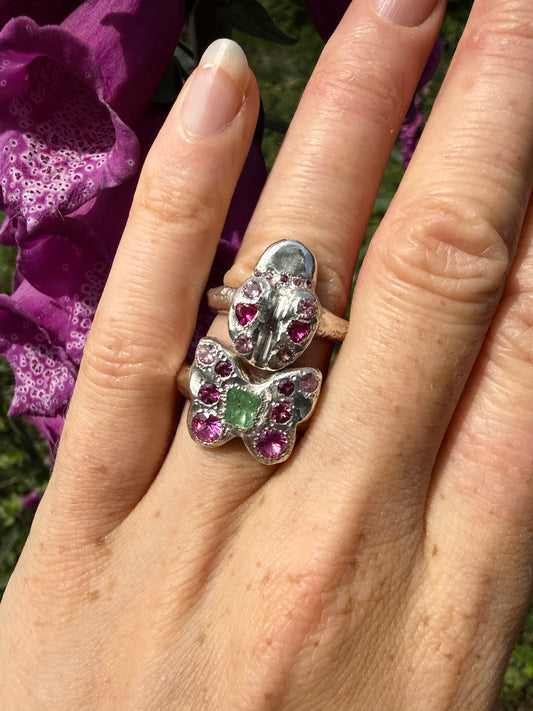
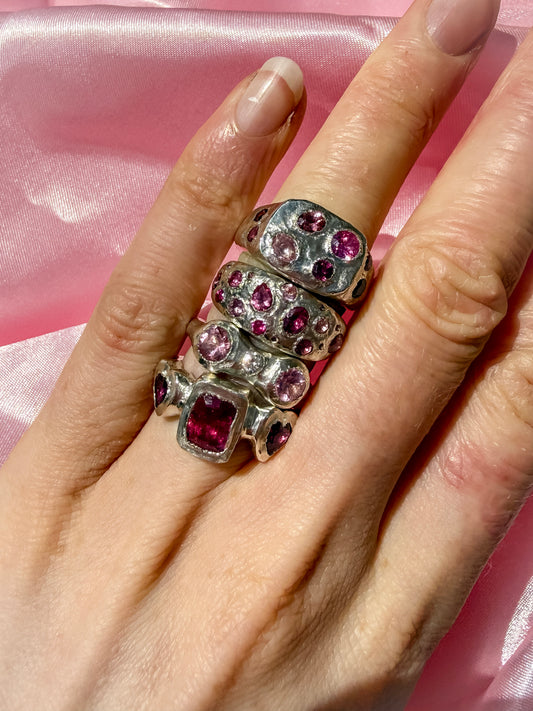
Here are some examples of jewellery I've created using lost wax carving and casting. The blue stuff is jeweller's wax, which I sculpt into different shapes before it is cast into metal. All of these pieces were cast into sterling silver.
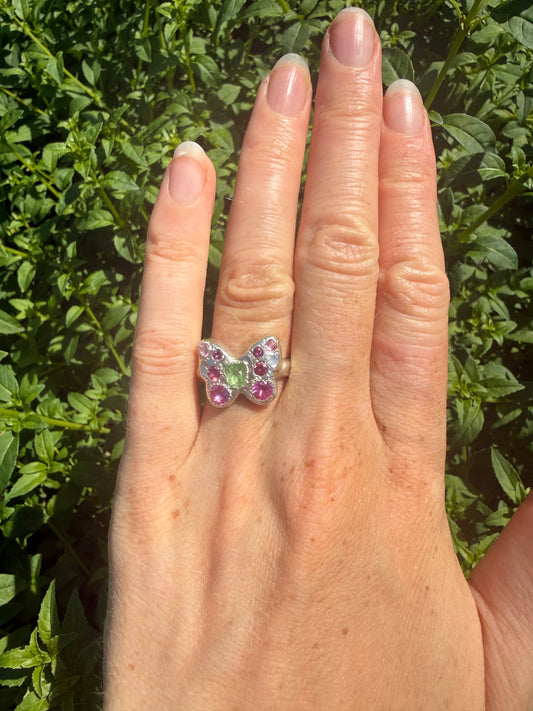
The top two rings are from my made to order collection. The single stone pink ring is called Queen Amarantha's Jewel, made from a radiant cut lab-grown pink sapphire, and the green and pink ring is called Thistleheart of the Fae, made with a mossy emerald cabochon, lab-grown pink sapphires and natural emeralds.
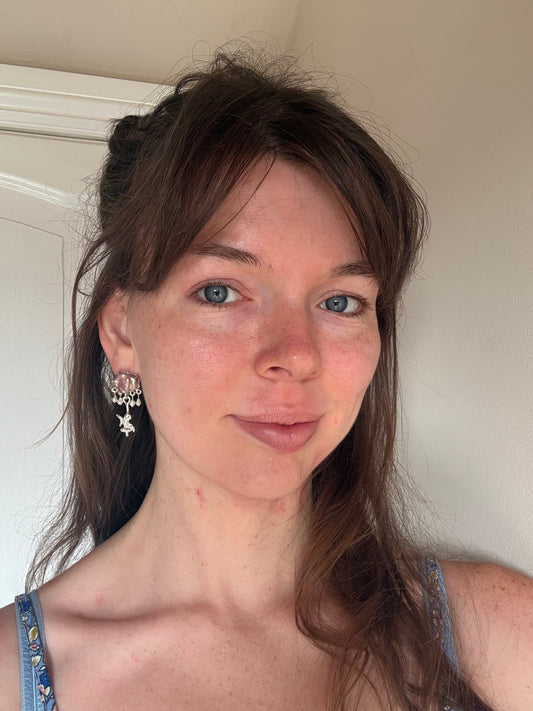
The earrings are my one of a kind Fairy Raincloud earrings, one of my most whimsical designs made with lavender keshi pearls, baroque rice pearl raindrops, and hand carved silver fairies.
Is Lost Wax Casting Handmade?
Lost wax casting can be handmade, although the answer depends on how the original wax model is created.
Some jewellers work digitally using CAD software and resin printers, while others sculpt every design by hand in wax.
I create my wax models by hand, carving and shaping wax into the final design before sending it to a specialist casting company.
Because each wax model is individually made and the wax is destroyed during casting, every piece begins with a unique original sculpture rather than a reusable mould.
Why Do Jewellers Use Lost Wax Casting Instead of Making Everything by Hand?
People sometimes assume that casting is a shortcut compared to traditional jewellery-making techniques, but that's not really the case.
Fabricated jewellery is made by cutting, forming and soldering together sheet metal and wire. This approach is excellent for many styles of jewellery, particularly geometric or highly engineered designs.
Lost wax casting offers different creative possibilities.
The technique allows jewellers to create:
- Organic shapes
- Intricate textures
- Sculptural forms
- Three-dimensional details
- Nature-inspired designs.
As a jeweller inspired by fairies, folklore and the natural world, I often use lost wax casting because it allows me to create flowing, textured and organic forms that would be difficult to achieve through fabrication alone.
The casting process itself may be ancient, but every wax model still has to be designed and sculpted by hand.
For example, I purposefully created a woodbark-like texture on the ring band for Queen Amarantha's Jewel, and for Thistleheart of the Fae, I wanted the prongs to look like twisted vines holding the gemstones in place. This makes both ring designs look more like fairy treasure and as if the metal grew up around the stones, rather than if they were precisely cut and measured.
Can a Lost Wax Cast Piece Still Be One of a Kind?
Absolutely.
Many people associate the word "cast" with mass production, but casting and mass production are not the same thing.
A one-of-a-kind piece can be created through lost wax casting if the original wax model is only used once.
Because I sculpt each wax model individually and the wax melts away during casting, the original model no longer exists once the metal version is created.
This means every handmade wax carving begins as a unique sculpture and can result in a completely one-of-a-kind finished piece.
One of a Kind Silver Jewellery
Explore our collection of one-of-a-kind solid sterling silver jewellery.
-
Fairy Raincloud Earrings - One of a Kind
Regular price £550.00 GBPRegular priceUnit price / perSale price £550.00 GBP -
Seafoam the Butterfly Ring - One of a Kind - Size UK N / N 1/2 / O / O 1/2
Regular price £335.00 GBPRegular priceUnit price / perSale price £335.00 GBP -
Love Bug Ring - One of a Kind - UK N / N 1/2 / O / O 1/2 / P
Regular price £325.00 GBPRegular priceUnit price / perSale price £325.00 GBP -
Berry Blossom Scatter Band - One Of A Kind - UK Size M
Regular price £345.00 GBPRegular priceUnit price / perSale price £345.00 GBP
Is Cast Jewellery Strong and Durable?
Yes.
Properly designed and professionally cast jewellery is intended for everyday wear and can be extremely durable.
In fact, much of the fine jewellery sold by independent jewellers and luxury brands is produced using casting techniques.
Some people assume fabricated jewellery is always stronger because different sections are soldered together by hand. In reality, the strength of a piece depends far more on its design, construction and metal thickness than whether it was fabricated or cast.
Well-made cast jewellery can last for generations with appropriate care and maintenance.
For Bespoke Commissions, Can I See the Wax Model Before My Commission Is Cast?
Yes!
One advantage of the lost wax casting process is that the design can be reviewed before any precious metal is used.
For bespoke commissions, I take a 50% deposit to create the wax model. Once completed, I'll share images of the sculpture and discuss any adjustments you'd like to make before the design is cast.
This allows you to be part of the creative process and gives you confidence that the finished piece accurately reflects your vision.
What Metals Can Be Used in Lost Wax Casting?
Lost wax casting can be used with a wide range of precious metals.
I currently work with a casting company that offers:
- Sterling silver
- 9ct gold
- 14ct gold
- 18ct gold
- Platinum
Most professional casting services offer several precious metal options, allowing designs to be produced in different materials depending on budget and preference.
How Long Does the Lost Wax Casting Process Take?
Lost wax casting is a multi-stage process and usually takes place over several weeks rather than a single day.
The process typically includes:
- Designing the piece
- Sculpting the wax model
- Creating the investment mould
- Casting the piece in precious metal
- Removing casting sprues
- Cleaning and refining the surface
- Stone setting (if applicable)
- Polishing and finishing
The exact timeline depends on the complexity of the design, but bespoke and handmade pieces often involve many hours of work spread across multiple stages.
Does Lost Wax Casting Capture Fine Details?
Yes! Just look at the detail on the hand carved fairies on my Fairy Raincloud Earrings as an example of the expression lost wast casting can achieve!
One of the biggest advantages of lost wax casting is its ability to reproduce extremely fine details.
The mould captures the texture of the original wax model, allowing intricate details to transfer into metal with remarkable accuracy.
This makes the technique particularly well suited to:
- Floral jewellery
- Nature-inspired jewellery
- Fantasy jewellery
- Fairy-inspired designs
- Organic textures
- Sculptural settings
Many of the textured, molten and enchanted forms I create would simply not be possible without the flexibility offered by lost wax casting.
Conclusion
Lost wax casting is one of the oldest and most versatile jewellery-making techniques in existence. By transforming a hand-carved wax model into metal, the process allows jewellers to create intricate, sculptural and highly detailed designs that would be difficult to achieve using other methods.
Although the technique has been used for thousands of years, it remains central to contemporary jewellery making because of the creative freedom it offers. Whether you're commissioning a bespoke engagement ring, investing in a one-of-a-kind piece or simply curious about how jewellery is made, understanding lost wax casting reveals the remarkable craftsmanship that exists behind every finished piece.
For me, it's the technique that allows ideas inspired by folklore, fairy tales and the natural world to move from imagination into precious metal.
More articles you might like...
Is Sterling Silver Suitable For An Engagement Ring?